
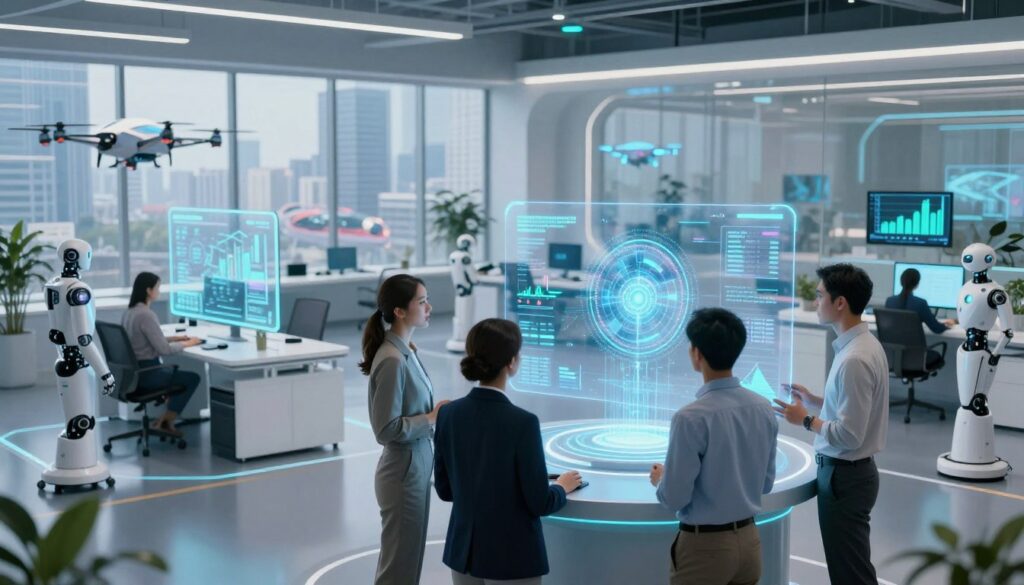
Welcome to a world where dreams become reality through innovation. Today, modern technology is doing things we once thought were impossible. Whether you live in Delhi or work in Bangalore, these smart tools are everywhere around us.
The rise of Artificial Intelligence (AI) is at the heart of this global change. It is not just about complex robots; it is about making our daily tasks much smoother. This evolution helps people across India reach new heights in their careers and personal lives.
We are diving into how ai is getting smarter and more helpful every single day. Our guide will cover everything from basic concepts to the latest breakthroughs. Let’s take a look at how this technology builds a brighter tomorrow for all of us.
Key Takeaways
- Impact of modern innovation on daily routines in India.
- The growing role of smart systems in various industries.
- How digital tools improve efficiency for professionals.
- Future trends that will redefine our global society.
- Real-world applications that solve common human problems.
- The friendly and accessible side of technical growth.
1. The Revolutionary Wave of AI Technology
The rapid progression of AI technology is reshaping industries and societies.
As we dive into the current state of AI, it’s essential to understand its capabilities and the factors driving its advancement.
Understanding Modern AI Capabilities
AI systems are becoming increasingly sophisticated, enabling them to perform complex tasks that were previously the exclusive domain of humans.
From Narrow AI to Advanced Systems
Narrow AI, designed to perform a specific task, has been the foundation of early AI development.
However, the focus is now shifting towards creating more advanced systems that can generalize and adapt to various tasks. The development of advanced AI systems is driven by improvements in machine learning algorithms and the availability of large datasets.
The Power of Machine Learning Algorithms
Machine learning algorithms are the backbone of modern AI, enabling systems to learn from data and improve their performance over time.
- Key aspects of machine learning include pattern recognition, predictive analytics, and decision-making.
- These algorithms allow AI systems to adapt to new data and make informed decisions.
The Acceleration of AI Development in Recent Years
The development of AI has accelerated significantly in recent years, driven by advancements in computing power, data storage, and the availability of large datasets.
These factors have combined to enable the creation of more sophisticated AI systems, with applications across various industries.
2. How Artificial Intelligence (AI) is Transforming Industries
The advent of Artificial Intelligence (AI) is revolutionizing the industrial landscape at an unprecedented pace. As technology advances, AI’s integration into various sectors is not just a trend but a necessity for businesses aiming to stay competitive.
The Cross-Industry Impact of AI Technology
AI is having a profound impact across different industries. From manufacturing to healthcare, AI is enhancing operational efficiency, reducing costs, and improving customer experiences. For instance, in manufacturing, AI-powered machines can predict maintenance needs, reducing downtime and increasing productivity.
Measuring AI’s Economic Contribution Globally
The economic contribution of AI is significant and growing. According to recent studies, AI is expected to contribute substantially to the global economy in the coming years. The table below highlights the projected economic impact of AI across different regions.
| Region | Projected AI Contribution by 2030 |
|---|---|
| North America | $3.7 Trillion |
| Europe | $2.7 Trillion |
| Asia | $10.4 Trillion |
Why Businesses Are Investing in AI Solutions
Businesses are investing heavily in AI solutions to gain a competitive edge. AI enables companies to analyze vast amounts of data, predict market trends, and make informed decisions. Moreover, AI-powered chatbots and virtual assistants are enhancing customer service, leading to higher customer satisfaction.
Key benefits of AI investment include:
- Increased operational efficiency
- Improved customer experiences
- Data-driven decision making
3. AI Breakthroughs in Healthcare and Medical Sciences
Recent advancements in AI have significantly impacted healthcare, enabling early disease detection and personalized medicine.
Disease Diagnosis and Early Prediction Systems
AI algorithms are being increasingly used for analyzing medical data to predict and diagnose diseases more accurately and at an early stage. AI-powered diagnostic tools can analyze vast amounts of medical data, including images and patient histories, to identify patterns that may elude human clinicians.
AI-Powered Medical Imaging Analysis
One of the significant applications of AI in healthcare is in medical imaging analysis. AI systems can be trained to interpret images from X-rays, MRIs, and CT scans to detect abnormalities such as tumors. Deep learning algorithms have shown remarkable accuracy in identifying issues that might be missed by human eyes.
Detecting Cancer and Chronic Diseases Earlier
Early detection is crucial for effectively treating diseases like cancer. AI can help in analyzing data from various sources to predict the likelihood of cancer or other chronic diseases, enabling early intervention. Some key benefits include:
- Enhanced accuracy in diagnosis
- Speeding up the diagnostic process
- Personalized screening recommendations based on patient risk factors
Drug Discovery and Development Acceleration
AI is also revolutionizing the drug discovery process by analyzing vast datasets to identify potential drug candidates and predict their efficacy. This not only accelerates the development process but also reduces costs.
Personalized Treatment Plans Through AI Analytics
By analyzing patient data, AI can help in creating personalized treatment plans tailored to individual needs. This approach considers genetic profiles, medical histories, and lifestyle factors to provide targeted therapies.
The future of healthcare is being shaped by AI, with potential for improved patient outcomes, more efficient clinical workflows, and groundbreaking research in medical sciences.
4. Revolutionizing Education Through AI Technology
AI technology is revolutionizing the education sector by making learning more personalized and accessible. This transformation is evident in various aspects of the educational process.
Adaptive Learning Platforms for Personalized Education
Adaptive learning platforms use AI to tailor the learning experience to individual students’ needs, abilities, and learning styles. This personalization enhances student engagement and improves learning outcomes.
Virtual Tutors and AI Educational Assistants
Virtual tutors and AI educational assistants provide additional support to students. They offer real-time feedback and guidance, helping students to understand complex concepts.
24/7 Learning Support for Students
One of the significant advantages of AI educational assistants is their ability to provide 24/7 learning support. Students can access help whenever they need it, making learning more flexible.
Language Learning with AI Tools
AI tools are also being used to enhance language learning. They offer interactive lessons, correct pronunciation, and conversational practice, making language acquisition more effective.
- Personalized learning experiences
- Real-time feedback and assessment
- Enhanced accessibility for students with disabilities
5. AI in Business Operations and Enterprise Solutions
As technology advances, AI is becoming a cornerstone in enhancing business efficiency and innovation. Businesses across various sectors are adopting AI solutions to stay competitive and achieve operational excellence.
Automating Repetitive Business Processes
The use of AI in automating repetitive tasks is one of its most significant benefits. By leveraging AI, businesses can automate mundane processes such as data entry, document processing, and customer service inquiries. This not only reduces operational costs but also enhances productivity by freeing up human resources for more strategic tasks.
AI-powered automation tools can handle a wide range of tasks, from simple data processing to complex workflow management. For instance, AI can be used to automate invoice processing, employee onboarding, and other HR-related tasks. This automation leads to increased efficiency and reduced errors.
Predictive Analytics for Strategic Decision Making
AI-driven predictive analytics is another critical application in business operations. It enables companies to make informed decisions by analyzing historical data and forecasting future trends.
Sales Forecasting and Inventory Management
Predictive analytics can be used for sales forecasting, allowing businesses to anticipate demand and manage their inventory accordingly. This helps in reducing stockouts and overstocking, thereby optimizing inventory levels.
Risk Assessment and Financial Planning
AI can also be used for risk assessment and financial planning. By analyzing market trends and financial data, AI can help businesses identify potential risks and opportunities, enabling them to make strategic financial decisions.
Customer Service Enhancement Through AI Chatbots
AI chatbots are revolutionizing customer service by providing 24/7 support to customers. These chatbots can handle a wide range of customer inquiries, from simple queries to complex issues, thereby enhancing customer experience.
By integrating AI into their operations, businesses can not only improve their efficiency and decision-making but also provide a better customer experience. As AI technology continues to advance, its role in business operations is expected to become even more significant.
6. Machine Learning and Deep Learning Innovations
The rapid evolution of machine learning and deep learning is transforming the technological landscape. These advancements are not only enhancing existing applications but also enabling new use cases across various industries.
Neural Networks and Their Real-World Applications
Neural networks, inspired by the human brain’s structure and function, are a crucial component of deep learning. They have been instrumental in achieving state-of-the-art results in image and speech recognition, natural language processing, and more. Real-world applications include:
- Predictive maintenance in manufacturing
- Personalized recommendations in e-commerce
- Advanced driver-assistance systems in automotive
Natural Language Processing Advances
NLP has seen significant advancements, driven by the development of more sophisticated algorithms and the availability of large datasets. These advances have improved human-computer interaction and enabled more effective text analysis.
Understanding Human Language Better
Modern NLP techniques can capture the nuances of human language, including context, idioms, and sentiment. This has led to more accurate sentiment analysis and language translation systems.
Real-Time Translation and Content Generation
Real-time translation technologies have broken language barriers, facilitating global communication. Additionally, AI-powered content generation tools are being used to create high-quality content, such as news articles and social media posts.
Computer Vision Breakthroughs
healthcare, security, and automotive industries. Breakthroughs include improved object detection, facial recognition, and image segmentation.
These innovations in machine learning and deep learning are driving technological advancements and transforming industries worldwide, paving the way for a more efficient and connected future.
7. The Integration of AI and IoT in Smart Systems
As AI and IoT converge, they are creating smarter systems that are transforming industries and daily life. This integration is leading to the development of innovative solutions across various sectors.
Smart Homes and Connected Devices Revolution
The concept of smart homes is becoming increasingly popular, with AI and IoT playing a crucial role in enhancing home automation, energy efficiency, and security.
Intelligent Home Automation Systems
Intelligent home automation systems allow homeowners to control lighting, temperature, and entertainment systems remotely, making life more convenient and energy-efficient.
Energy Management and Security Solutions
AI-powered energy management systems optimize energy consumption, while advanced security solutions, including surveillance cameras and door locks, provide enhanced safety and peace of mind.
Industrial IoT Applications for Manufacturing
The Industrial Internet of Things (IIoT) is transforming manufacturing processes by enabling real-time monitoring, predictive maintenance, and optimized production workflows.
Smart Cities and Urban Planning Innovations
Smart city initiatives are leveraging AI and IoT to improve urban infrastructure, traffic management, and public services, making cities more livable and sustainable.
| Application | AI & IoT Benefits |
|---|---|
| Smart Homes | Enhanced automation, energy efficiency, and security |
| Industrial IoT | Improved manufacturing efficiency and predictive maintenance |
| Smart Cities | Better urban planning, traffic management, and public services |
The integration of AI and IoT is paving the way for a more connected and intelligent future, with numerous benefits across various industries and aspects of daily life.
8. AI’s Role in Daily Consumer Applications
AI’s impact on daily consumer applications is profound, changing how we live, work, and play. From enhancing user experiences to providing personalized services, AI is revolutionizing the way consumers interact with technology.
Virtual Assistants and Voice Recognition Technology
Virtual assistants like Siri, Google Assistant, and Alexa have become ubiquitous, using AI to understand voice commands and perform tasks. This technology has made it easier for consumers to manage their daily routines, from setting reminders to controlling smart home devices.
Personalized Recommendation Systems
AI-driven recommendation systems are used by various consumer applications to suggest products or services based on user behavior and preferences.
Streaming Services and Content Suggestions
Streaming platforms like Netflix and Spotify use AI to recommend content based on viewing or listening history.
E-Commerce Shopping Recommendations
E-commerce websites like Amazon use AI to suggest products based on browsing and purchase history.
| Platform | AI Application | Benefit |
|---|---|---|
| Streaming Services | Content Suggestions | Personalized Entertainment |
| E-Commerce | Shopping Recommendations | Targeted Product Suggestions |
| Smartphones | AI-enhanced Photography | Improved Photo Quality |
AI in Mobile Photography and Smartphone Apps
AI is also enhancing mobile photography with features like scene detection, portrait mode, and low-light enhancement. Smartphone apps are leveraging AI to provide users with advanced photography capabilities, making it easier to capture high-quality images.
Overall, AI is making significant contributions to daily consumer applications, enhancing user experiences and providing personalized services.
9. Ethical Considerations and Responsible AI Development
With AI increasingly influencing our daily lives, ensuring that its development is guided by ethical principles is crucial. As we continue to integrate AI into various sectors, from healthcare and education to business operations, the need to address ethical concerns becomes more pressing.
Addressing Bias and Fairness in AI Systems
One of the critical ethical considerations is addressing bias and ensuring fairness in AI systems. Bias can creep into AI through the data used to train algorithms, leading to discriminatory outcomes.
Identifying Algorithmic Bias
Identifying algorithmic bias involves scrutinizing the data sets used for training AI models. Ensuring that these data sets are diverse and representative is key to minimizing bias.
Creating Inclusive AI Models
Creating inclusive AI models requires a multifaceted approach, including diverse development teams and rigorous testing protocols to identify and mitigate bias.
Privacy and Data Protection Concerns
Another significant ethical concern is privacy and data protection. As AI systems often rely on vast amounts of personal data, ensuring that this data is handled responsibly is paramount.
Ensuring Transparency and Accountability in AI
Transparency and accountability are also crucial. Understanding how AI systems make decisions and being able to hold them accountable is essential for building trust in AI.

By prioritizing ethical considerations, we can ensure that AI development is not only innovative but also responsible and beneficial to society as a whole.
10. Challenges Facing AI Implementation
Implementing AI technology is not without its hurdles, and understanding these challenges is key to successful integration. As organizations move to adopt AI solutions, they must navigate a complex landscape of technical, operational, and regulatory challenges.
Technical Limitations and Computational Requirements
The development and deployment of AI systems require significant computational resources. This includes powerful hardware and sophisticated infrastructure to support the processing of large datasets.
Hardware and Infrastructure Needs
AI systems demand high-performance computing hardware, including GPUs and TPUs, to process complex algorithms efficiently. Organizations must invest in robust infrastructure to support these needs.
Data Quality and Availability Issues
High-quality data is essential for training accurate AI models. However, issues such as data bias, scarcity, and privacy concerns can hinder AI development.
Skill Gap and Workforce Transition Challenges
The adoption of AI technology requires a workforce with specialized skills, including data science, machine learning, and programming. Bridging the skill gap is crucial for successful AI implementation.
Developing Regulatory and Legal Frameworks
As AI technology advances, there is a growing need for regulatory frameworks that address issues such as privacy, bias, and accountability. Governments and organizations must work together to develop and implement these frameworks.
Addressing these challenges is crucial for the successful implementation of AI technology. By understanding and mitigating these challenges, organizations can unlock the full potential of AI and drive innovation.
11. AI Development and Adoption in India
With a robust strategy in place, India is making significant strides in AI development and adoption. The country is leveraging AI to drive innovation and economic growth across various sectors.
Government Initiatives and National AI Strategy
The Indian government has launched several initiatives to promote AI adoption. These include:
Digital India and AI Integration
The Digital India program aims to transform the country into a digitally empowered society. AI is a key component of this initiative, with a focus on using technology to improve governance and public services.
Funding and Research Programs
The government has established various funding and research programs to support AI research and development. This includes grants for startups and research institutions working on AI projects.
Indian Startups Leading AI Innovation
Indian startups are playing a crucial role in driving AI innovation. They are developing cutting-edge solutions in areas such as healthcare, finance, and education.
Growing Opportunities for India’s Tech Workforce
The growth of AI in India is creating new opportunities for the tech workforce. As the demand for AI professionals increases, there is a need for skilled workers who can develop and implement AI solutions.
| Area | Opportunities | Growth Potential |
|---|---|---|
| AI Research | High demand for researchers | High |
| AI Development | Increasing demand for developers | Very High |
| AI Ethics | Growing need for ethical AI professionals | Moderate |
12. Conclusion
As we have explored throughout this article, Artificial Intelligence (AI) is revolutionizing numerous facets of our lives and industries. From transforming healthcare and education to enhancing business operations and daily consumer applications, AI’s impact is profound and far-reaching.
The development and adoption of AI in countries like India are expected to drive significant economic and societal changes. With government initiatives and a growing number of startups innovating in the AI space, the future looks promising.
As AI continues to advance, it is crucial to address the challenges associated with its development and implementation, including ethical considerations and technical limitations. By doing so, we can ensure that AI benefits society as a whole.
The journey of AI is just beginning, and its potential to shape the future is vast. As we move forward, it is essential to stay informed and engaged with the developments in this field.